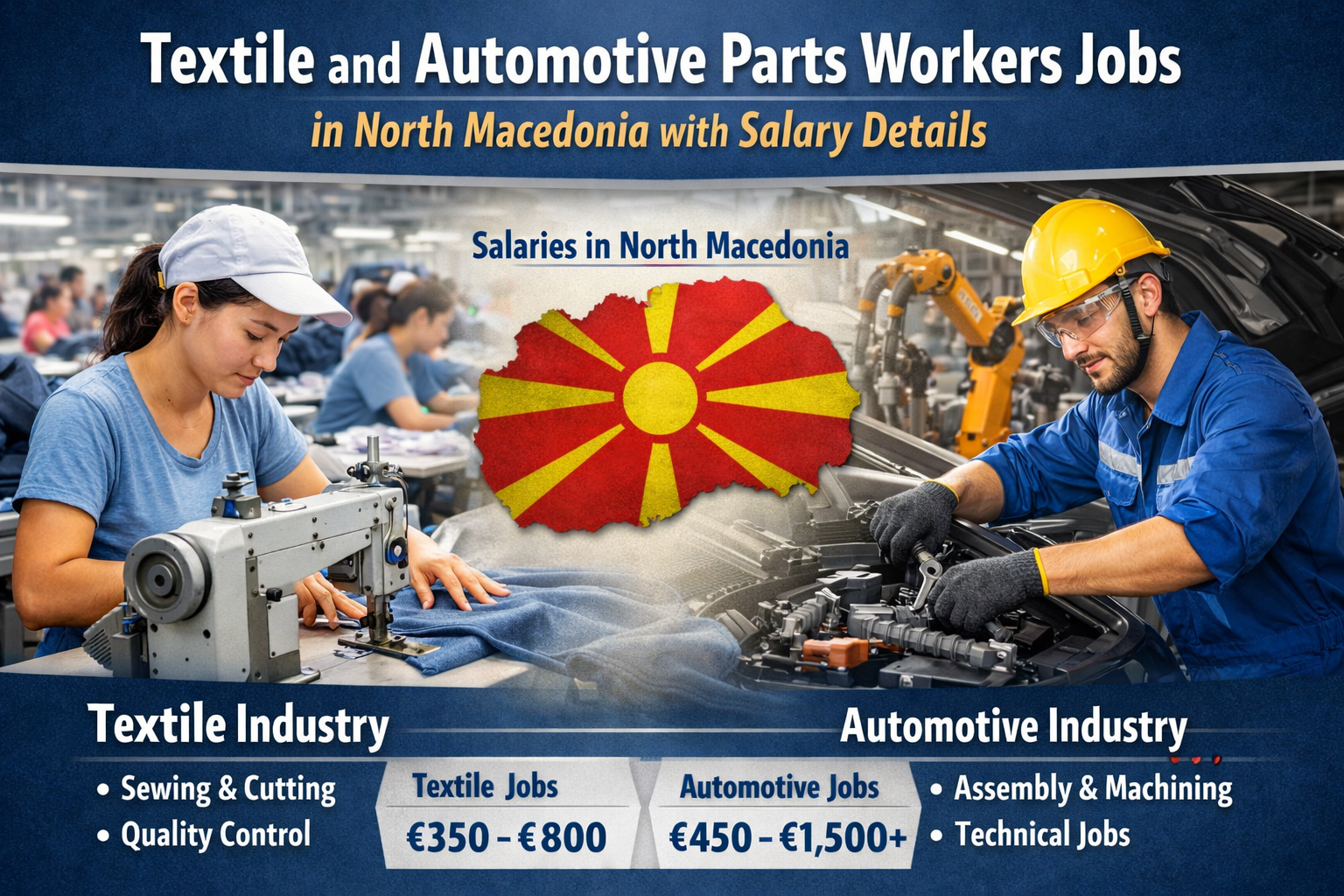
Learn about Textile and Automotive Parts Workers’ jobs in North Macedonia with salary details, including job roles, salaries, skills, top employers, and career growth opportunities in an easy-to-read, professional guide.
North Macedonia has steadily grown into a competitive manufacturing hub in Southeast Europe. Among the most important contributors to this growth are the textile industry and the automotive parts manufacturing sector. Together, they employ tens of thousands of workers and attract foreign investment from well-known European brands.
This article provides a detailed and practical guide to textile and automotive parts workers’ jobs in North Macedonia with salary details. Whether you are a local job seeker, a foreign worker exploring opportunities, or simply researching the labor market, you’ll find valuable insights here. We’ll cover job roles, salary ranges, skills required, working conditions, and future prospects—without jargon or keyword stuffing.
Skills Required for Textile and Automotive Parts Workers’ Jobs in North Macedonia
| Skill | Qualification/Experience |
|---|---|
| Machine Operation Skills | Basic ability to operate sewing machines, assembly lines, or automated production equipment while following standard operating procedures accurately. |
| Quality Control Awareness | Understanding of quality standards, defect identification, and inspection processes to meet export and industry requirements. |
| Technical & Mechanical Knowledge | Familiarity with tools, machinery parts, or basic mechanical concepts is especially important in automotive parts manufacturing. |
| Time Management | Ability to meet production targets, manage repetitive tasks efficiently, and maintain productivity during peak shifts. |
| Teamwork & Coordination | Willingness to work closely with supervisors, technicians, and co-workers to ensure smooth workflow on production lines. |
| Physical Stamina | Capacity to stand for long hours, lift materials, and perform repetitive motions in factory environments. |
| Basic Communication Skills | Understanding work instructions in Macedonian or English; basic foreign language skills are an advantage in international factories. |
| Attention to Detail | Carefulness in assembling parts, stitching garments, labeling products, and maintaining consistency in production quality. |
| Safety & Compliance Awareness | Knowledge of workplace safety rules, protective equipment use, and adherence to factory regulations. |
| Professional Work Ethic | Reliability, punctuality, discipline, and willingness to learn new skills to support long-term employment and growth. |
Overview of the Manufacturing Sector in North Macedonia
North Macedonia’s manufacturing sector plays a vital role in the national economy, accounting for a significant share of employment and exports.
Why Manufacturing Is Growing
- Strategic location connecting Europe and the Balkans
- Competitive labor costs
- Government incentives for foreign investors
- Free Economic Zones supporting export-oriented industries
Textile production and automotive parts manufacturing are especially strong due to established supply chains and skilled labor availability.
Textile Industry Jobs in North Macedonia
The textile industry has a long tradition in North Macedonia and remains one of the largest employers in the country.
Common Textile Worker Job Roles
Textile jobs range from entry-level factory work to skilled technical and supervisory positions:
- Sewing machine operators
- Textile cutters and pattern makers
- Quality control inspectors
- Ironing and finishing workers
- Line supervisors and production managers
Many factories work as subcontractors for European fashion brands, producing garments for export.
Skills Required for Textile Jobs
- Basic sewing and machine operation skills
- Attention to detail
- Ability to meet production targets
- Teamwork and reliability
While formal education is not always required, experience can significantly improve earning potential.
Textile Workers’ Salary Details
Average monthly salaries in the textile sector are generally modest but stable:
- Entry-level workers: €350–€450
- Experienced operators: €450–€600
- Supervisors and technicians: €600–€800
Wages may vary depending on location, company size, overtime availability, and export contracts.
Automotive Parts Workers Jobs in North Macedonia
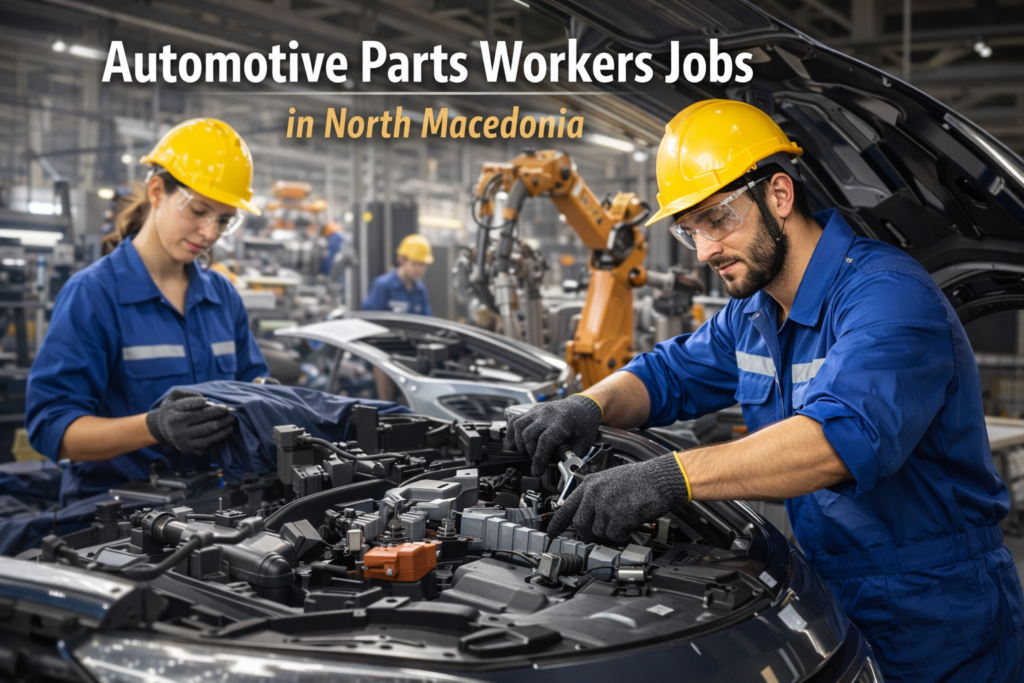
The automotive parts industry is one of the fastest-growing sectors in the country, driven by foreign direct investment.
Types of Automotive Parts Jobs
Automotive factories in North Macedonia produce wiring systems, electronic components, metal parts, and interior components.
Common job roles include:
- Assembly line workers
- Machine operators (CNC, molding, stamping)
- Electrical and mechanical technicians
- Quality assurance specialists
- Warehouse and logistics staff
Major employers often operate in industrial zones near Skopje, Štip, Bitola, and Tetovo.
Skills Needed in Automotive Manufacturing
- Basic technical or mechanical knowledge
- Ability to follow strict quality standards
- Willingness to work in shifts
- Familiarity with safety procedures
Technical training or vocational education is a strong advantage in this sector.
Automotive Parts Workers Salary Details
Automotive jobs typically offer higher wages compared to textile work:
- Entry-level assembly workers: €450–€550
- Skilled technicians: €600 – €900
- Engineers and supervisors: €1,000–€1,500+
Additional benefits may include paid training, transportation allowances, and performance bonuses.
Comparison: Textile vs Automotive Jobs
| Factor | Textile Industry | Automotive Parts Industry |
|---|---|---|
| Average Salary | Lower | Higher |
| Skill Level | Basic to intermediate | Intermediate to advanced |
| Growth Potential | Limited | Strong |
| Working Conditions | Labor-intensive | More automated |
| Foreign Investment | Moderate | High |
This comparison helps job seekers decide which sector aligns better with their skills and career goals.
Working Conditions and Labor Environment
Typical Work Schedules
- 8-hour shifts, often with overtime
- Automotive factories may use rotating shifts
- Peak seasons increase overtime in textile factories
Employee Rights and Benefits
- Legal minimum wage protections
- Social security and health insurance
- Paid annual leave
For official labor standards, workers can consult the Ministry of Labor and Social Policy of North Macedonia or international resources like the International Labour Organization (ILO).
How to Find Textile and Automotive Jobs in North Macedonia
Job seekers can explore multiple channels to find opportunities:
Popular Job Search Methods
- Online job portals
- Recruitment agencies
- Company career pages
- Local employment offices
For related opportunities, you may also explore internal resources such as
🔗 See more manufacturing jobs in North Macedonia: /manufacturing-jobs-north-macedonia
Career Growth and Future Outlook
The future of textile and automotive parts workers’ jobs in North Macedonia with salary details looks promising, especially in automotive manufacturing.
Key Trends to Watch
- Increased automation and upskilling
- Higher demand for technicians and engineers
- Gradual wage growth due to labor shortages
- Expansion of export-focused factories
Workers who invest in technical training or language skills (especially German or English) can significantly improve their career prospects.
Advantages and Challenges of Working in These Sectors
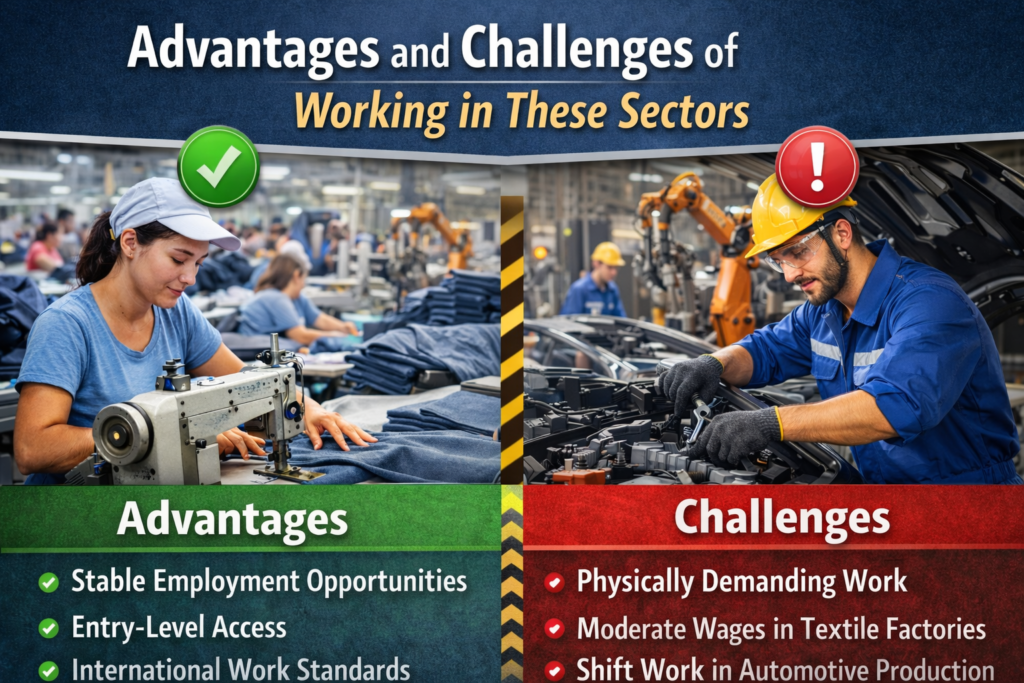
Advantages
- Stable employment opportunities
- Entry-level access without high education barriers
- International work standards in automotive plants
Challenges
- Physically demanding work
- Moderate wages in textile factories
- Shift work in automotive production
Understanding both sides helps workers make informed decisions.
Conclusion
The manufacturing landscape in North Macedonia offers real opportunities for both local and foreign workers. Textile and Automotive Parts Workers Jobs in North Macedonia with Salary details reveal a clear contrast between traditional textile roles and the rapidly expanding automotive sector.
While textile jobs provide accessible entry points into the workforce, automotive parts manufacturing offers higher salaries, better career growth, and exposure to global production standards. With the right skills and expectations, both sectors can provide stable employment and long-term potential.